Jersey Number Size and Name Placement: A Team Guide
Back numbers are usually the largest element on a jersey, front numbers smaller, and names sit above the back number. Here is how to get them right.
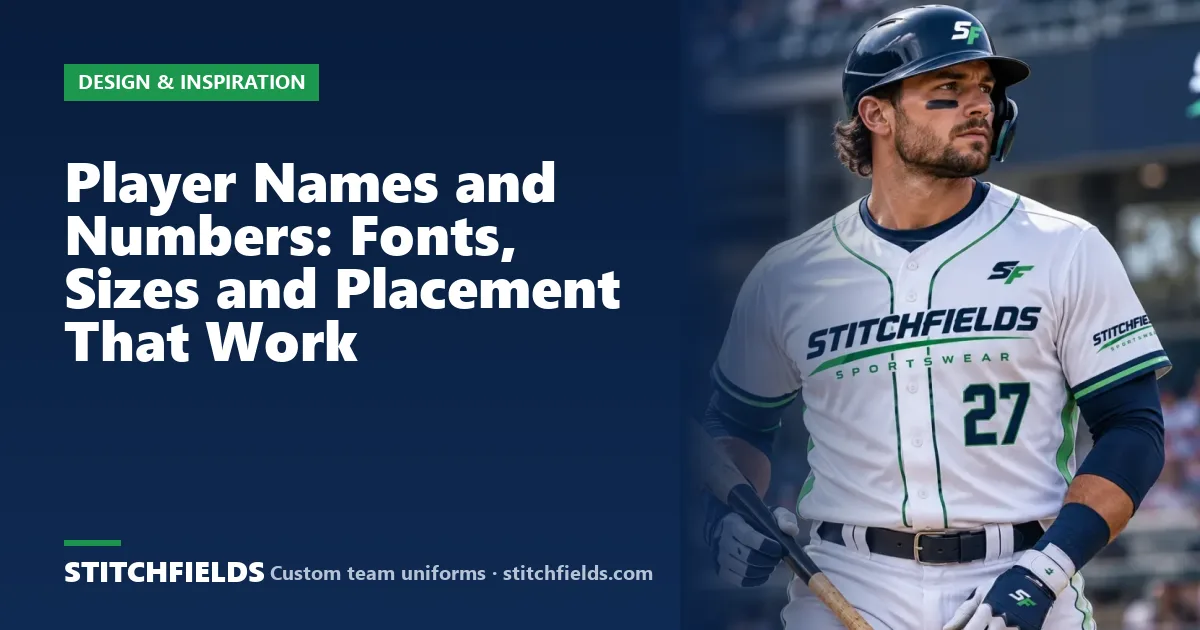
On most team jerseys, the back number is the largest element, the front number is smaller (or placed on the chest to one side), and the player name sits in an arc or straight line above the back number. Exact jersey number sizes depend on your sport and league rules, so check them before you approve a design.
Numbers matter more than they look. Umpires, scorekeepers and college coaches all rely on them, and a number that cannot be read from the stands causes real problems.
How big should jersey numbers be?
Back numbers should be big enough to read across the field or court. Many associations set minimum heights, especially in basketball, football and high school sports, so check your rules first.
As a guide to how teams typically lay out numbers:
| Sport | Back number | Front number | Notes |
|---|---|---|---|
| Baseball / softball | Large, centered | Small, left chest (or none) | Name above back number |
| Basketball | Large, centered | Large, centered | Rules often set minimum sizes front and back |
| Football | Very large | Very large | Must be visible over pads |
| Volleyball | Large, centered | Smaller, centered | Libero keeps the same number |
| Soccer | Large, centered | Small or none | Number on shorts is common |
Which fonts are easiest to read?
Bold block fonts read best from a distance. Script works beautifully for team names on the front, but numbers should be clear and solid. Avoid thin strokes and decorative fonts for numbers.
How do you make numbers stand out?
- Use a color with strong contrast to the jersey: white on navy, navy on white.
- Add an outline in a third color.
- Keep the area behind numbers free of busy patterns.
- Check the mockup on a phone screen and from across a room.
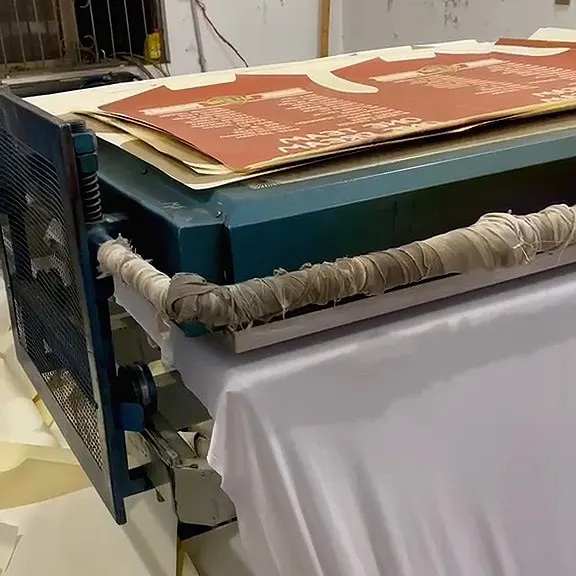
Names and numbers on sublimated jerseys are printed into the fabric with the rest of the design, so they do not crack or peel after washing.
Where should the player name go?
Above the back number, centered, usually in a gentle arc. Use the same font family as the numbers so the back reads as one design. Check spelling against the roster twice before you approve the mockup.
Are printed or stitched numbers better?
Sublimated (printed into the fabric) numbers are light, never peel and add no weight. Stitched tackle twill numbers give a raised, traditional look but add weight and cost. Read more in our guide to sublimated vs screen printed jerseys.
What rules should you check?
- Minimum number heights, front and back
- Allowed number range (some sports restrict digits)
- No duplicate numbers on the roster
- Contrast requirements
- Captain or libero markings
How do you collect names and numbers?
Ask each family for the name exactly as it should appear, a first-choice number and a backup. Put everything in one roster before you order. Our travel baseball checklist includes a full roster template.
How do you order from Stitchfields?
- Request a free mockup through the quote form; include your league's number rules.
- Approve the layout; revisions are free.
- Send the roster with names, numbers and sizes.
- Production takes 10–12 working days after approval, then duty-paid delivery.
Names, numbers and logos are included in every quote. See custom baseball uniforms for examples.
FAQ
How big should numbers be on a baseball jersey?
Back numbers are usually the largest element, centered; front numbers are smaller on the left chest. Check your league for exact sizes.
Are names and numbers included in the price?
Yes, every Stitchfields quote includes names, numbers and logos.
Do sublimated numbers peel?
No. They are printed into the fabric and do not crack or peel.
Can two players have the same number?
Most leagues do not allow duplicates on one roster.
Get a free design mockup in 24 hours
Send your logo, colors and roster. All-in, duty-paid quote. No minimums. Or message us on WhatsApp.